
Case Study: Fully Integrated Vial Filling, Labeling, and Blister Cartoning Line
12/14/2019
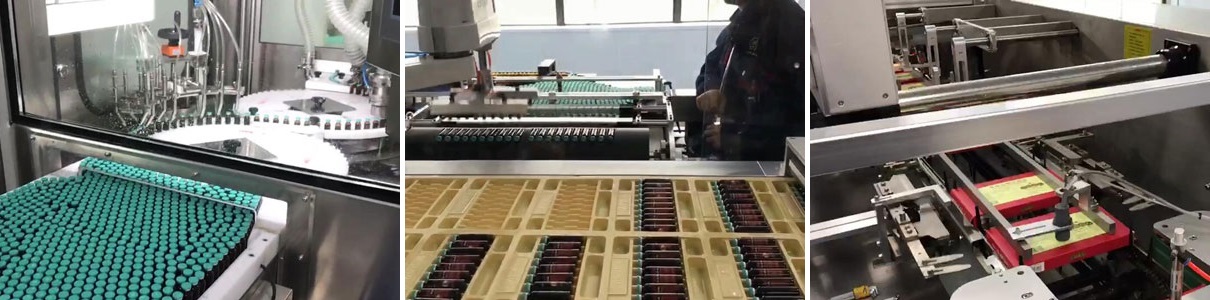
A line combined with vial filling, labeling, blistering, and cartoning
Recently, Jornen successfully delivered a highly automated vial blister packaging line for a pharmaceutical customer in China. This state-of-the-art line is a seamless combination of four core units: a vial filling machine, a labeling machine, a blister machine, and a cartoning machine. To maximize efficiency and ensure gentle handling of fragile vials, the line is equipped with two advanced robotic arms for precision feeding and transfer.
Phase 1: Automated Filling and Labelling
The process begins as empty glass vials are manually placed into an initial unscrambler. A conveyor transfers them to dual turntables for precise liquid filling, followed by a rigorous inspection unit. Once cleared, the vials move through a second unscrambler and are gently laid down onto the labeling machine’s conveyor via a screw mechanism. After the labels are perfectly applied, a third unscrambler stages the vials for the blistering phase.
Phase 2: Robotic Precision Blister Feeding
In the blister feeding unit, a conveyor transports the labeled vials into specialized tracks. A motor-driven slider distributes them evenly from side to side, while a rake guides them into chutes, forming them into neat rows. From here, the vials enter the slots of a servo-regulated roller.
The roller rotates 90 degrees, moving the vials into a horizontal position. An advanced EPSON robotic arm, equipped with vacuum suction cups, simultaneously collects the vials from the roller slots and places them accurately and gently into the formed blister web.
Phase 3: The “Clamp-Pack” Design (No Heat Sealing Required)
This specific blister pack utilizes a clever clamp-pack design. After the robotic arm pre-feeds the vials, a press-in device pushes them firmly into the bottom of the formed plastic pockets. The structural tension of the pocket clamps the vial securely in place.
Because the vials are firmly locked into the thermoformed trays by friction and design, there is no need for a foil lidding or sealing material to prevent them from falling out. Consequently, this blister packaging machine operates entirely without a heat-sealing station—it only requires forming and cutting stations, which significantly simplifies the machine’s footprint and reduces energy consumption.
Phase 4: Seamless Robotic Cartoning
After the blister cards are cut, a second robotic transfer unit picks up the completed blister trays and places them directly onto the conveyor of the cartoning machine. The system automatically inserts the trays along with a folded informational leaflet into the carton, securely closes the flaps, and discharges the finished boxed product.
Watch the Complete Line in Action:
See the synchronization of the filling, robotic feeding, and cartoning processes in the video below:
(Date: December 14, 2019)
(Jornen Machinery – Advanced Auto-Pack Technologies)