Technical Guide: Integrated PVC Splicer Operation (DPP260 Blister Machine)
03/26/2017
To minimize downtime and improve operational efficiency during web changes, the DPP260 blister packaging machine can be optionally equipped with an integrated forming material (PVC) splicer.
Splicer Components & Adjustments:
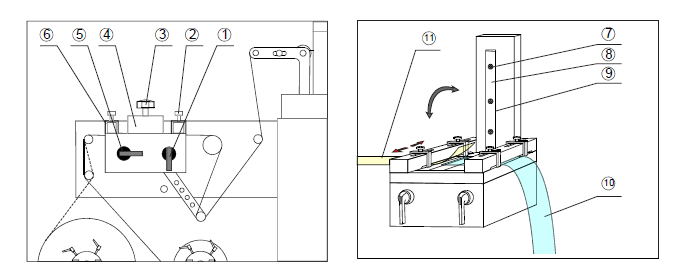
1 & 6. Left & Right Pneumatic Clamping Valves: Turning these two rotary valves to the horizontal position actuates the pneumatic cylinders, securely clamping the PVC web in place.
2. Web Alignment Adjusting Screws: Loosening these screws allows operators to precisely adjust and align the lateral position of the forming material web.
3. Cutter Baseboard: The blade is safely housed beneath this board. During normal machine operation, the cutter baseboard must remain locked in the upright (standby) position.
4. Cutter Actuation Handle: Pressing down on this handle smoothly slices through the clamped PVC layers.
Standard Operating Procedure (SOP) for Splicing:
When the active PVC reel is depleted, follow these precise steps to splice the new material without re-threading the entire machine:
When the active PVC reel is depleted, follow these precise steps to splice the new material without re-threading the entire machine:
-
- Overlap the leading edge of the new PVC web with the trailing edge of the old web on the splicing platform.
-
- Turn the left and right pneumatic valves (1 & 6) to the horizontal position to firmly clamp both layers of PVC.
-
- Push down the cutter handle (4) to simultaneously cut through both overlapped layers, ensuring perfectly matched and flush edges.
-
- Apply industrial splicing tape to seamlessly connect the cut ends of the old and new PVC webs.
-
- Turn the pneumatic valves back to the vertical position to release the pneumatic clamps.
-
- Return the cutter baseboard to the upright position and resume machine operation.
Integrated Splicer Schematic Diagram