The Importance of AI-Driven Machine Vision in Pharmaceutical Blister Packaging
11/06/2026
Editor’s Note: This article was originally published in November 2019 and has been comprehensively updated to reflect the latest advancements in AI-driven machine vision technology and cGMP compliance.
In the pharmaceutical industry, safety and efficacy are inextricably linked to strict quality control. The primary objective of pharmaceutical detection is to prevent unqualified or compromised products from reaching the market. Traditional inspection methods relying on human intervention have long been rendered obsolete by the speed and precision required in modern manufacturing. Today, the integration of advanced machine vision technology is a mandatory engineering standard to guarantee 100% inspection of pharmaceutical quality, physical integrity, and packaging safety.
The Shift to AI-Driven Machine Vision
As production speeds escalate and regulatory oversight intensifies, human eyes and basic physical quantity sensors are incapable of consistently measuring micro-dimensions, matching complex shapes, and identifying subtle color deviations in a continuous manner. The industry has therefore transitioned to automated machine vision architectures.
Recent technological advancements have introduced Artificial Intelligence (AI) and Deep Learning algorithms into visual inspection systems. By leveraging big data—analyzing thousands of image variations of acceptable and defective products—modern algorithms can dynamically compensate for acceptable runtime variations (such as minor natural color shifts in biological extracts) while maintaining extremely high sensitivity to genuine foreign bodies and micro-defects. This intelligent software architecture significantly reduces sequential teach times and minimizes false rejection rates, ensuring that pharmaceutical blister machines operate at maximum efficiency without compromising quality.
Comprehensive Defect Detection Capabilities
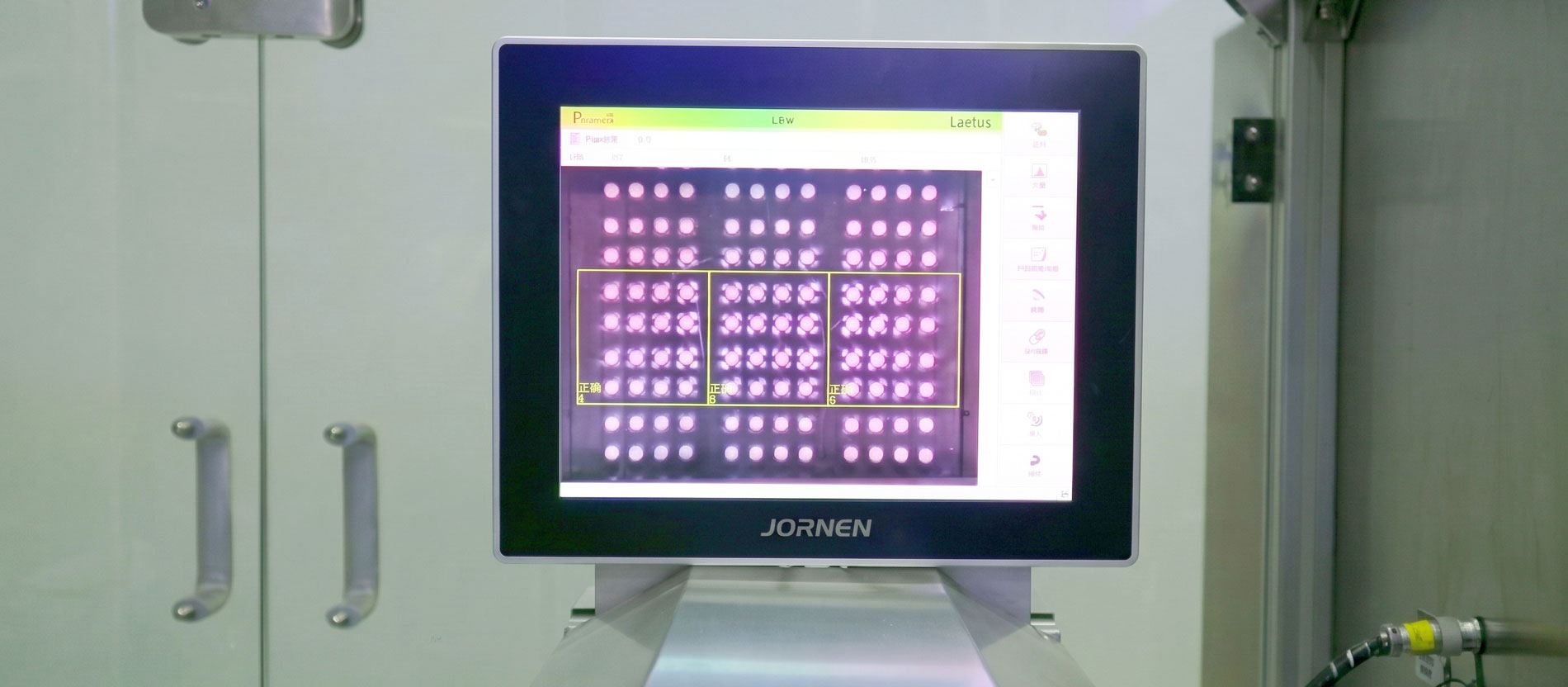
Integrated directly into high-speed blister packaging equipment, the modern inspection system utilizes ultra-high-resolution, multi-megapixel color cameras to detect the smallest deflections at full continuous or intermittent web speeds. Capable of inspecting transparent, opaque, and colored PVC or Aluminum foils, the system identifies a comprehensive matrix of critical parameters:
- Product Integrity: Detects crushed, powdered, or chipped solid doses.
- Presence and Placement: Identifies missing products (empty pockets), incorrect positioning, or overlapping tablets.
- Surface and Color: Recognizes minute black spots and subtle shade variations to ensure the correct formulation is packed.
- Foreign Objects: Detects unwanted fragments or cross-contamination outside the immediate blister pocket.
Advanced Optical Hardware and cGMP Compliance
To execute real-time analysis, the optical hardware relies on low-distortion telecentric lenses to provide dimensionally accurate images across the entire web width. High-density LED array lighting, equipped with temperature compensation and advanced heat-sinking mechanisms, ensures reliable, uniform illumination throughout the equipment’s lifecycle. Data transmission is handled by high-speed industrial Ethernet protocols (such as GigE Vision), replacing outdated legacy communication interfaces.
In pharmaceutical environments, data security and validation are paramount. The inspection software operates on a strict “fail-safe” logic: every blister is considered defective until actively proven good by the algorithm. The system continuously records the quantity of inspected blisters, the specific nature of any detected anomalies, and statistical frequency data for batch reporting.
Furthermore, the system architecture complies with FDA 21 CFR Part 11 requirements, featuring Role-Based Access Control (RBAC) with distinct security tiers for operators, supervisors, and administrators. Once a specific format is learned and validated by the vision system, a strict calibration protocol ensures that configurations remain securely locked. This level of automated, rigorous oversight makes machine vision an indispensable component within modern solid dose blister packers, safeguarding both patient health and manufacturer compliance.