Technical Guide: Working Principle of the DPP260Ki2 Sealing Station
04/27/2017
The sealing station of the DPP260Ki2 Blister Packaging Machine is a critical juncture where the formed web and lidding foil are hermetically sealed. This process relies on precise temperature control, mechanical synchronization, and pneumatic safety mechanisms to ensure packaging integrity and protect heat-sensitive pharmaceuticals.
1. Mechanical Synchronization & Sealing Process
The continuous sealing cycle operates through the synchronized actuation of the upper and lower moulds:
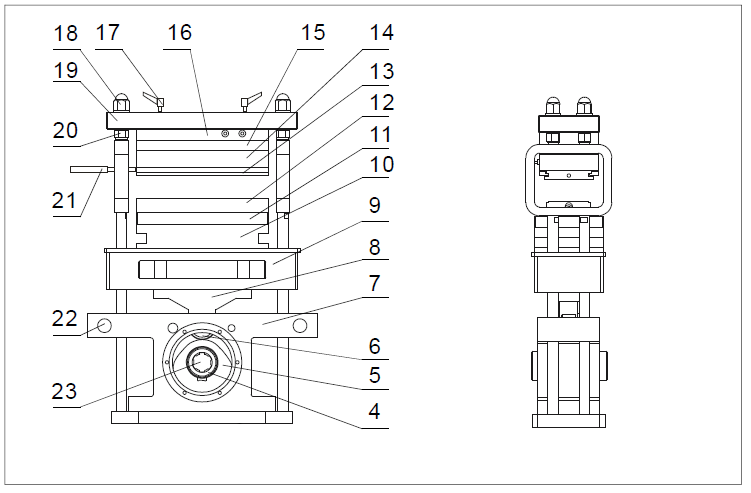
- Operational Setup: During active production, the heat sealing cylinder drives the upper sealing mould (15) to its lowest operational position. The localized sealing temperature is typically maintained at approximately 160°C.
- Web Indexing: As the lower sealing mould (12) moves downward, the moulds separate. The filled forming web (containing the product) and the lidding foil are simultaneously indexed forward into the sealing station.
- Thermal Sealing: The sealing cam (5) drives the lower sealing mould upward to close against the upper mould. The combined application of heat (160°C) and mechanical pressure activates the adhesive layer on the lidding foil, hermetically fusing it to the forming web.
- Advancement: The lower mould retracts downward, allowing the sealed web to index forward to the subsequent embossing and cutting stations.
2. Thermal Protection Mechanism (Auto-Lift)
To safeguard product efficacy, the DPP260Ki2 is equipped with an automatic pneumatic lift safety feature. In the event of a machine stoppage, the upper sealing mould (15) automatically retracts upwards. This prevents residual radiant heat and hot air from penetrating the stationary blister cavities, ensuring that the active pharmaceutical ingredients (APIs) are not degraded by prolonged thermal exposure.
Sealing Station Schematic Diagram