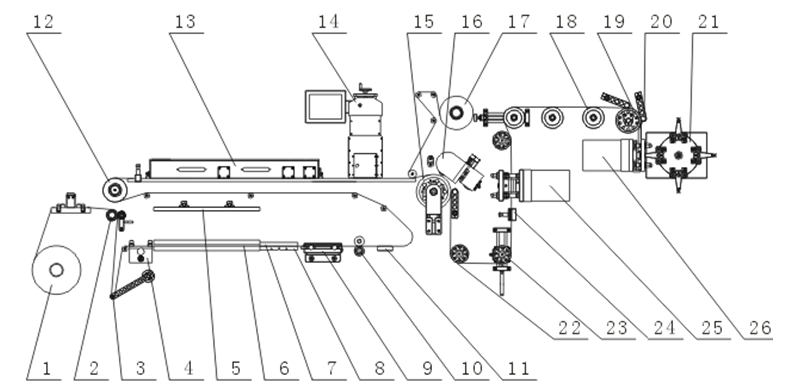
Schematic Diagram: Mechanical Workflow of the DPH Series Blister Machine
12/09/2018
The DPH series Blister Packaging Machine utilizes a continuous rotary sealing and intermittent forming architecture. The entire packaging web is synchronized and advanced through the system via dedicated servo-driven traction mechanisms [10, 19]. The mechanical workflow is divided into three primary operational phases:
1. Thermoforming Phase
The base forming material (PVC) [1] is indexed via the conveyor roller [2] into the thermal zone. It passes between the upper and lower heating plates [5, 6] to reach optimal plasticity. The softened web then enters the upper and lower forming molds [7, 8], where positive compressed air initiates precision cavity thermoforming.
2. Product Feeding and Rotary Sealing
The formed cavities advance into the feeding zone [13] for automated dosage loading. Subsequently, the lidding foil (Alu) [17] is introduced and merges with the base web at the sealing station. A high-speed rotary sealing roller [16] applies continuous thermal pressure against the sealing mold [15], establishing a secure, hermetic bond between the PVC and Aluminum webs.
3. Embossing and Die-Cutting
The sealed continuous web is drawn by the cutting traction mechanism [19] into the embossing station [25] for precise lot and date coding. Finally, the web enters the cutting station [26], where precision dies punch the web into individual blister cards. The remaining skeleton waste material is continuously trimmed and discharged into a dedicated collection bin.