
Comparative Analysis: Thermoforming, Cold Forming, and Tropical Blister Packaging
01/02/2014
Blister packaging represents the standard unit-dose modality for solid dose pharmaceuticals. Depending on the barrier requirements and forming principles, blister packaging systems are primarily categorized into three structural types: Thermoforming (Alu/Plastic), Cold Forming (Alu/Alu), and Tropical (Alu/Plastic/Alu).
1. Thermoforming Blister Pack (Alu/Plastic)
Process: A thermoplastic film (typically PVC) is guided through a heating station until pliable. It then enters a pneumatic forming station where positive air pressure forces the softened plastic into a mold cavity. Following product filling, the web is sealed with an aluminum lidding foil.
Advantages:
- Cost-Efficiency: PVC offers excellent thermoformability at a low material cost.
- Inspection Readiness: The transparent cavity allows for high-speed, accurate visual or camera-based defect rejection.
- Feeding Efficiency: The precise, snug fit of the cavity enables the use of universal high-speed feeders (utilizing circular brushes and planetary agitators) without requiring dedicated format parts for different products.
Disadvantages:
- Suboptimal barrier protection against moisture and oxygen ingress.
- Unsuitable for highly photosensitive compounds due to material transparency.
2. Cold Forming Blister Pack (Alu/Alu)
Process: An aluminum-based laminate film is plastically deformed (drawn) into a mold cavity using mechanical punches/stamps without the application of heat. It is subsequently sealed with a standard aluminum lidding foil.
Advantages:
- Absolute Protection: Provides a near-perfect barrier against moisture, light, and oxygen, significantly extending product shelf life.
Disadvantages:
- Slower operational throughput compared to thermoforming.
- Opaque packaging complicates automated camera inspection systems, increasing capital costs.
- Higher raw material costs (Cold Form Foil vs. PVC).
- Larger geometric footprint: Aluminum cannot be drawn at 90-degree angles, necessitating larger cavities and increasing overall material consumption.
- Requires dedicated, format-specific feeding systems, increasing tooling costs and changeover times.
3. Tropical Blister Pack (Alu/Plastic/Alu)
Process: This hybrid configuration integrates a standard Alu/Plastic thermoformed blister with an additional forming and sealing station. The primary thermoformed blister is secondarily sealed within a formed “tropical” aluminum trough.
Advantages:
- Retains the feeding efficiency and inspection transparency of standard thermoforming prior to the final seal.
- Matches the absolute environmental barrier (moisture, light, oxygen) of cold-formed Alu/Alu packaging.
Disadvantages:
- The addition of tropical aluminum laminate increases material costs.
- Requires an extended machine frame to accommodate the secondary forming and sealing stations.
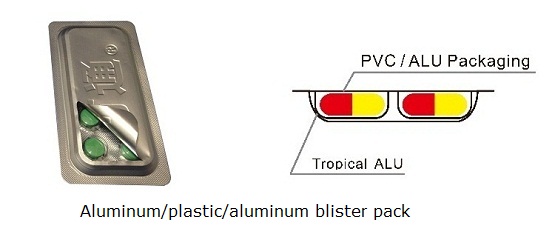
Figure 1: Structural cross-section of a Tropical Blister Pack.
4. Strip Packaging
Process: Unlike blister packs, strip packaging involves no pre-formed cavities. The dosage form drops directly into the sealing area where two separate Al/PE laminated films are heated and sealed simultaneously around the product.
Advantages: Delivers exceptional barrier protection equivalent to cold forming.
Disadvantages: Exhibits slower production speeds and requires a significantly larger packaging footprint per dosage unit due to the absence of formed cavities.

Figure 2: Dimensional footprint comparison: Strip Pack vs. Cold Forming vs. Thermoforming.