
Technical Literature: Blister Packaging Materials and Processes
07/07/2019
Blister packaging represents a highly engineered class of pre-formed plastic and aluminum enclosures utilized predominantly for pharmaceutical solid dosage forms, sterile medical devices, and high-value consumer goods. The core architecture consists of a forming web (the cavity or pocket) and a lidding seal (aluminum foil or paperboard backing). These robust containment systems are designed to shield sensitive products from external environmental factors, ensuring long-term defense against humidity, oxygen ingress, and particulate contamination. Opaque forming configurations further provide critical UV protection for light-sensitive pharmacological compounds.
1. Pharmaceutical Unit-Dose Packaging
In the global pharmaceutical sector, blister packs are the predominant standard for unit-dose packaging of tablets, capsules, and lozenges. Often referred to as “push-through packs” (PTP), they combine a semi-rigid, collapsible forming cavity with a brittle lidding foil. This precise mechanical property allows the consumer to easily extract the dosage by applying thumb pressure to fracture the foil. Pharmaceutical blister packs are manufactured using high-speed, integrated form-fill-seal equipment known as Blister Packaging Lines, ensuring absolute primary packaging integrity for every individual dose.

2. Consumer Goods and Medical Device Applications
- Consumer Carded Packaging: Products such as hardware and electronics are secured between a thermoformed transparent PVC shell and a printed display card, bonded utilizing heat-activated adhesives. For high-security requirements, rigid fused clamshell designs are deployed to deter retail pilferage.
- Medical Blister Trays: Unlike pharmaceutical push-through packs, sterile medical device packaging utilizes rigid, non-collapsible thermoformed base webs (typically 500–1000 μm in thickness). The lidding material (such as Tyvek®) is highly porous to facilitate terminal sterilization while maintaining a peelable, contaminant-free barrier for surgical deployment.
3. Core Process Engineering: Thermoforming vs. Cold Forming
- Thermoforming Process: A thermoplastic film is unwound and passed through a pre-heating station to achieve a pliable glass-transition state. Within the forming station, high-pressure compressed air (4–8 bar) forces the softened plastic into a chilled negative mold, instantly rigidifying the material. For complex or deep-draw cavities, a mechanical “plug-assist” descends prior to air injection, ensuring uniform wall distribution and preventing base rupture.
- Cold Forming (Alu-Alu) Process: In cold forming, an aluminum-based laminate is mechanically stamped into the mold using dedicated convex tooling—without the application of heat. While cold forming guarantees a near-absolute zero-transmission barrier against moisture and oxygen, it generally requires a larger packaging footprint (due to the material’s inability to form sharp 90-degree angles) and operates at lower production speeds than thermoforming.
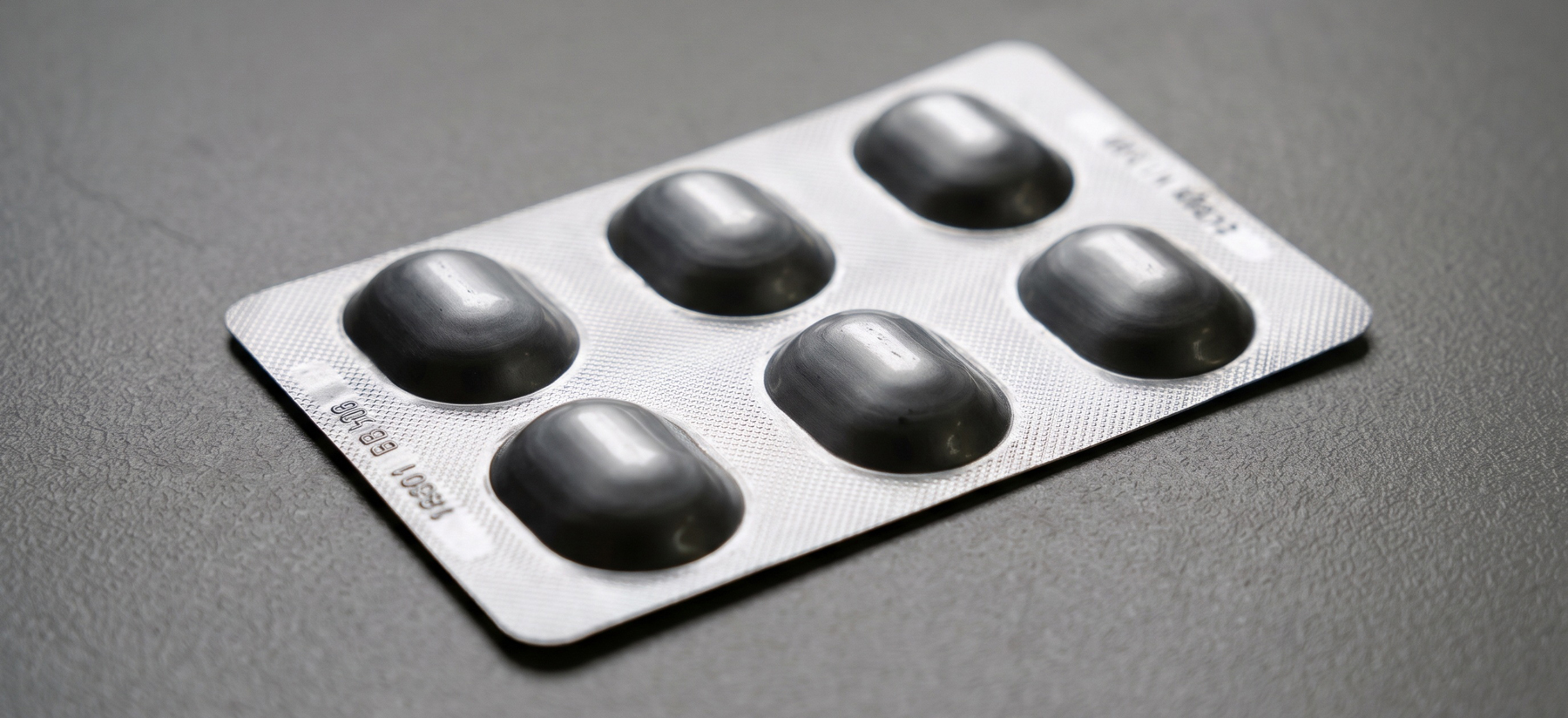
Cold Form blister pack featuring opaque metallic cavities for ultimate barrier protection. 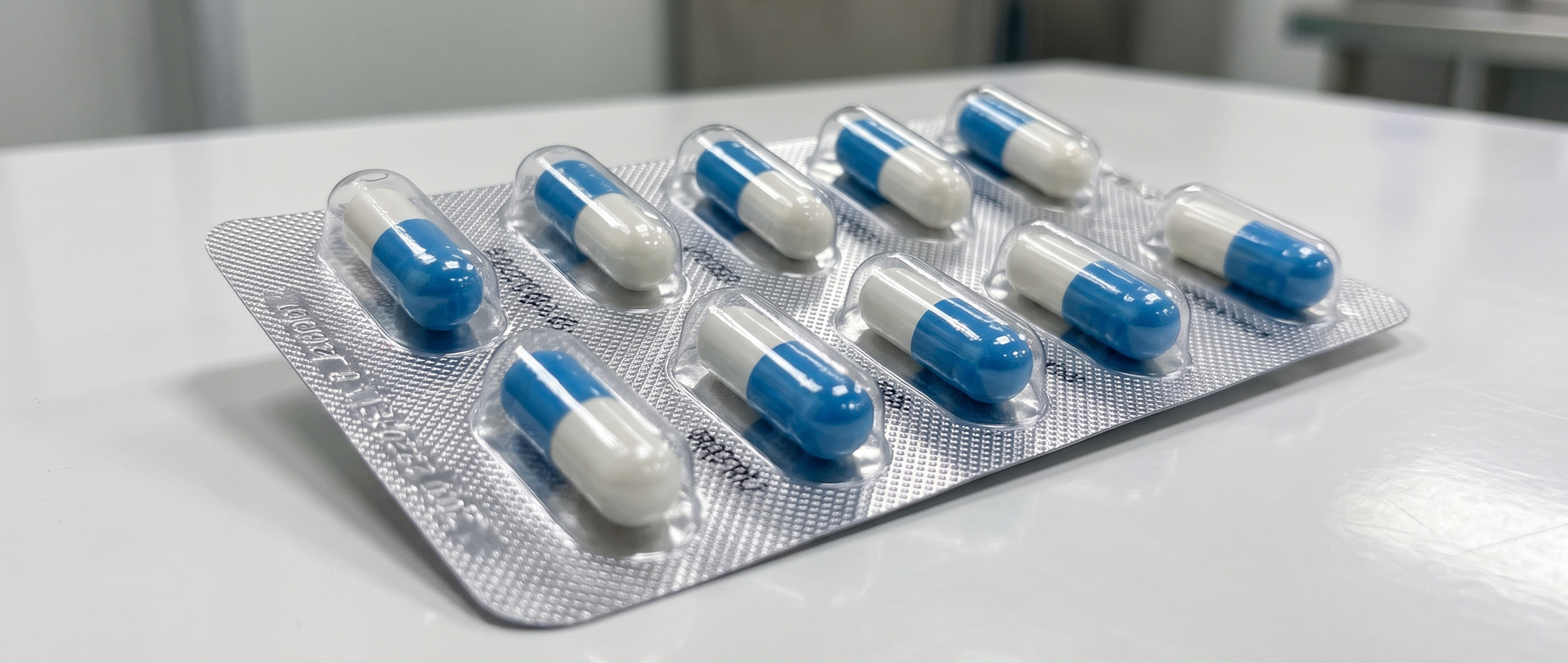
Thermoformed blister pack featuring transparent and reliable unit-dose protection.
4. Material Science and Barrier Substrates
Selecting the appropriate forming web relies on rigorous stability testing and the specific moisture vapor transmission rate (MVTR) demanded by the enclosed product.
- Unplasticized PVC (Rigid PVC): The baseline substrate. Extremely cost-effective with excellent thermoforming characteristics. Typically 250μm thick, offering structural rigidity but moderate moisture/oxygen resistance.
- PVDC Coatings: Applied over PVC via an aqueous emulsion process to drastically enhance barrier properties. Available in duplex (PVC/PVDC) or triplex (PVC/PE/PVDC) configurations, where the polyethylene (PE) layer provides a cushioning interface for deeper draws.
- PCTFE (Polychlorotrifluoroethylene): Frequently laminated to PVC, this fluoropolymer delivers the lowest water vapor permeation of any transparent thermoformable film, utilized heavily for highly hygroscopic drugs.
- COC/COP (Cyclic Olefin Copolymers): Halogen-free resins that provide excellent deep-draw thermoforming characteristics and superior moisture barriers, frequently co-extruded with Polypropylene (PP) or Polyethylene (PE) to comply with stringent environmental guidelines.
- Cold Form Foil (CFF): A sophisticated three-layer laminate comprising PVC (inner product contact layer) / Aluminum (absolute barrier core) / Polyamide (outer nylon reinforcement for mechanical ductility).
- Lidding Foils: The prevailing closure medium is 20μm hard-temper aluminum foil, coated internally with a heat-seal lacquer specific to the forming web, and externally with a primer to accept regulatory batch/expiry printing.
5. Strategic Packaging Advantages and GMP Compliance
- Tamper Evidence: In strict accordance with FDA regulations (e.g., 21 CFR § 211.132), unit-dose sealing inherently provides visible evidence of tampering. A fractured foil seal immediately alerts the consumer or medical practitioner to compromised product integrity.
- Therapy Compliance: Thermoformed layouts allow for calendarized printing directly on the lidding foil, significantly enhancing patient adherence regimens for chronic medications.
- Economic & Display Efficiency: Beyond pharmacological protection, the high clarity of PVC/PVDC webs offers exceptional visual product inspection capabilities on the packaging line, while the overall material architecture remains significantly more cost-effective than traditional glass or rigid plastic bottling systems.