
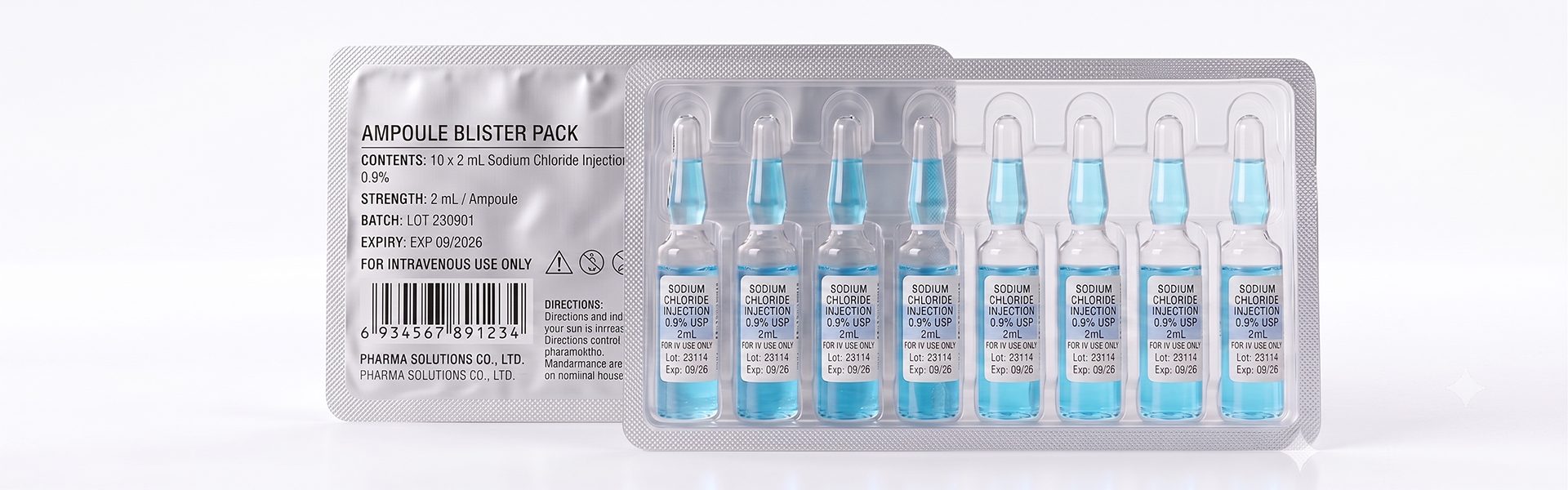
R&D Heritage: From Breakthrough to Flexible Automation
In the early 1990s, we recognized that blister packaging for ampoules represented a major industry trend with immense market potential, prompting us to invest heavily in specialized feeding systems. However, at the time, the lack of industrial robots and advanced vacuum technology meant early feeders lacked flexibility. This created a major pain point: rigid handling processes failed to protect fragile glass ampoules, often leading to breakage and limiting wider application.
The widespread adoption of industrial robots, vacuum generators, and precision suction cups enabled a qualitative and quantitative leap in our ampoule blister packaging technology.
Core Advantages: Empowering Modern Healthcare
Today, our blister packaging systems are widely used for parenteral products. A key advantage of this format is its exceptional flexibility: it can package individual ampoules or combine ampoules, vials, and syringes within a single blister unit. This combination packaging is highly convenient for medical personnel and is especially important for emergency rescue operations, such as in disaster zones or battlefield medicine.
Smart Integration: Breaking Packaging Silos
Modern ampoule blister packaging is no longer an isolated process or an information silo. Instead, it is seamlessly integrated with upstream equipment, such as labeling and inspection machines, to form a complete, continuous production line.
The Ingenious Ampoule Feeding Process
Typically, after ampoules exit the labeling machine, they are automatically transferred into an ampoule unscrambler, where they undergo the following precision steps:
Smooth Induction: A conveyor transports the ampoules into the tracks.
Even Distribution: A motor-driven slide distributes the ampoules evenly across the feeding matrix.
Precision Arraying: A rake guides the ampoules into the chutes, forming them into lines; from there, they continue into the slots of a roller.
Posture Conversion: The servo-driven roller turns 90 degrees, moving the vertical ampoules into a horizontal position.
Gentle Pick & Place: The robot arm (equipped with vacuum suction cups) then collects the ampoules from the roller slots and places them accurately and gently into the formed web.
Clamp-Pack Unique Design: A dedicated press-in station gently pushes the ampoules into the pockets to ensure they clamp firmly. This innovative undercut structure prevents products from falling out of the pockets and protects them from major impacts.
Key System Characteristics
Servo- and pneumatically driven robot arm equipped with vacuum suction cups.
Straightforward and rapid format changeover.
Gentle handling to strictly protect the ampoules from damage.
Adopts advanced servo-regulated technology for precise synchronization.
User-friendly operation due to an ergonomic filling height.
Selecting the Right Equipment: Platen Sealing Technology
For ampoule blister packaging, utilizing a platen-type blister machine is an absolute technical requirement. Rotary-type blister machines are fundamentally unsuitable for this application, as the cylindrical geometry of their sealing rollers cannot safely or effectively accommodate the deep, rigid cavities required for glass ampoules.
To meet diverse production demands, we offer two robust series of platen-style blister machines:
BMP Series (Balcony Layout): Engineered in strict compliance with cGMP concepts, this series utilizes a premium balcony-type cantilever structure for optimal hygiene and accessibility. Available models include the BMP180, BMP270, BMP400, and BMP700.
DPP Series (Traditional Layout): Featuring a classic top-and-bottom structural frame. Available models include the DPP150, DPP260/350/500.
Note: For both series, the model number indicates the maximum web width in millimeters. A larger numeric designation corresponds directly to a wider format and higher production capacity.
Three Versatile Packaging Modes
To accommodate diverse pharmaceutical production requirements, our machines support three distinct operational modes:
Sealed Blister (With Backing): The machine completes the entire blister process: thermoforming, robotic feeding, heat sealing, punching, and outputting the finished blister packs.
Unsealed Loaded Tray (Without Backing): Unlike solid doses, which strictly require a sealed backing for moisture protection, many pharmaceutical companies choose not to seal parenteral trays. In this mode, the machine thermoforms, feeds, and punches. Thanks to our unique clamp-pack design, there is absolutely no concern about ampoules falling out of the unsealed trays.
Empty Tray Thermoforming: The machine operates solely to thermoform and punch empty blister trays. The machine then discharges the empty trays onto a downstream conveyor for separate or offline feeding processes.
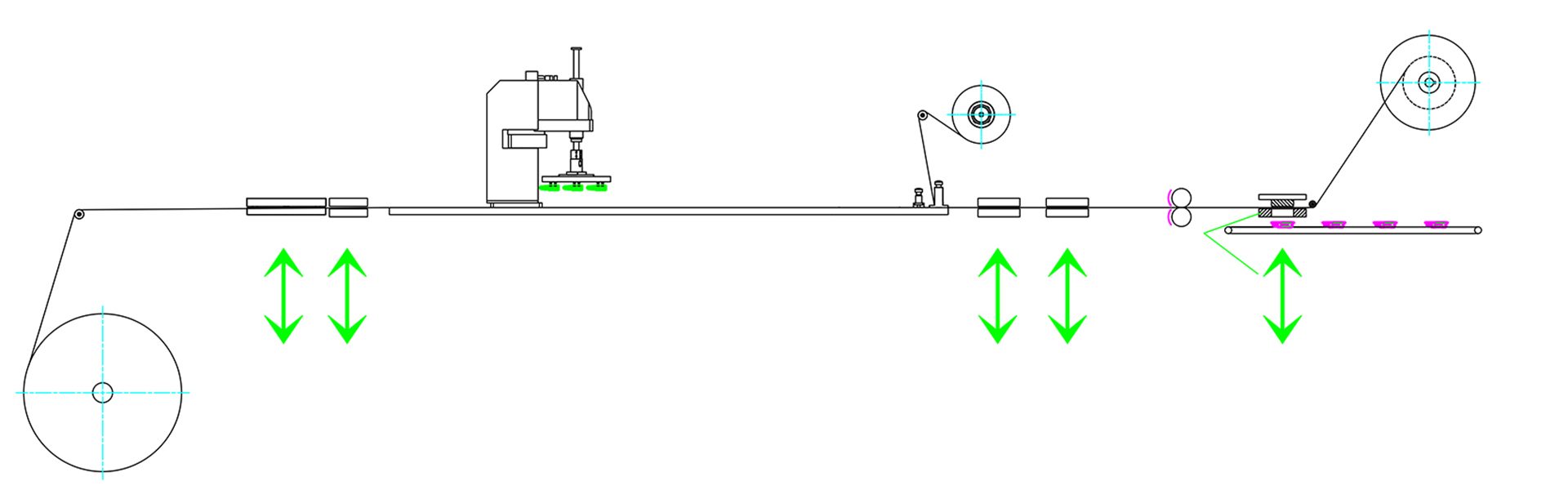
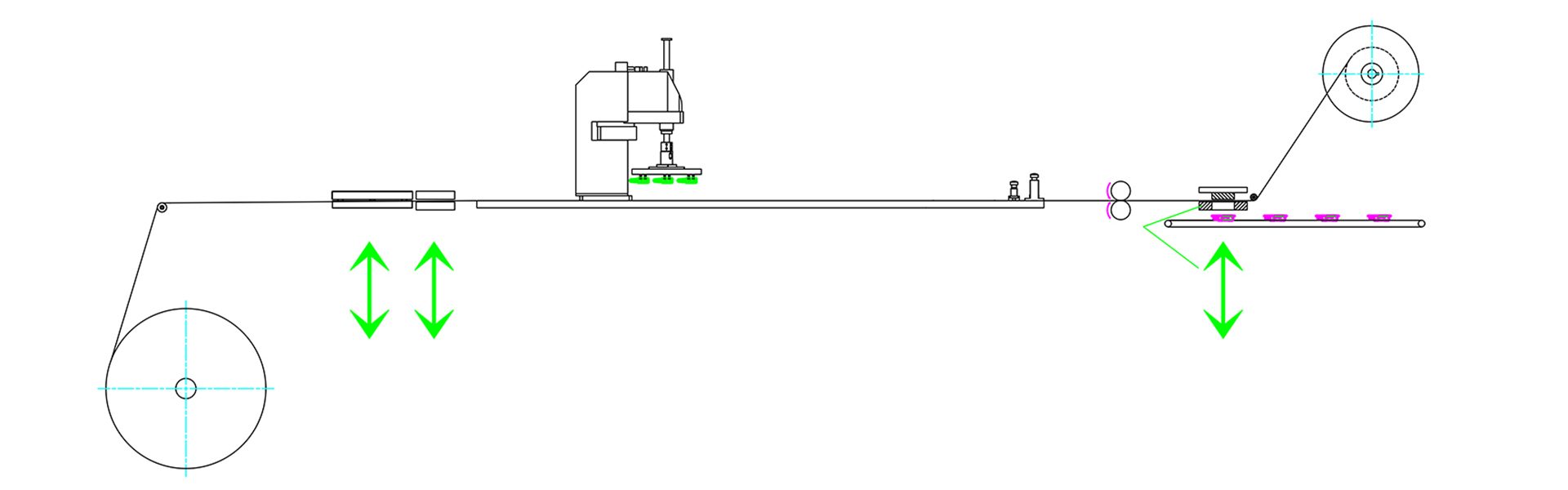
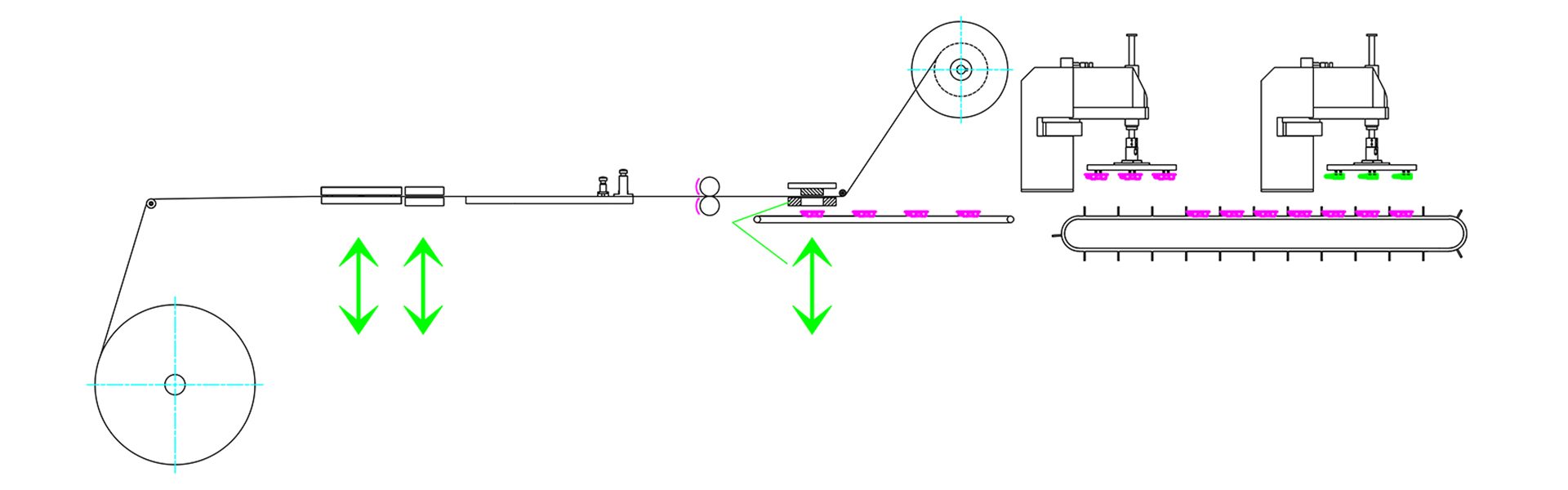
Seamless Cartoning Integration:
Regardless of the chosen mode, all three configurations can connect seamlessly to downstream cartoners to complete a fully automated “Blister + Cartoning” packaging line.