In the early 1990s, blister packaging for glass vials was a rarity in the pharmaceutical sector, primarily due to the absence of sophisticated industrial robotics and precise vacuum handling systems. The paradigm shifted dramatically post-2000. The widespread integration of industrial robots, advanced vacuum generators, and precision suction cups revolutionized the industry, paving the way for the extensive application of vial blister packaging we see today.
Transforming Parenteral Packaging
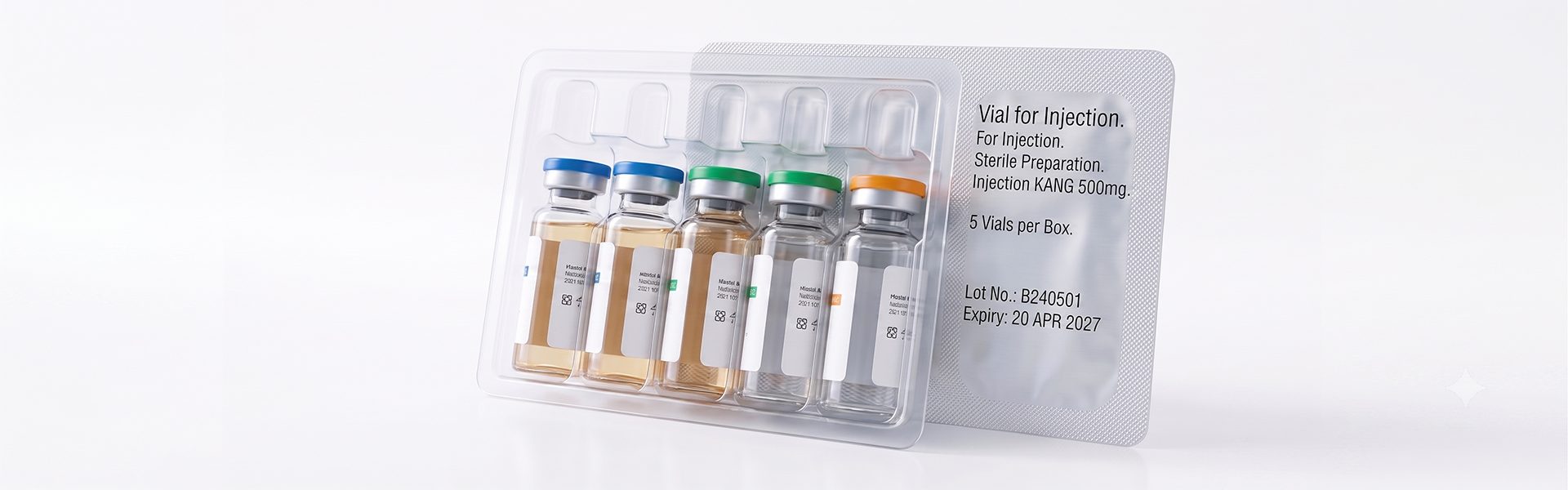
Today, our blister packaging systems are a staple for parenteral products. The standout benefit of this packaging format is its remarkable versatility: it can secure individual vials or seamlessly group vials, ampoules, and syringes within a single, integrated blister card. This unified packaging approach provides exceptional convenience for medical practitioners and plays a critical role in rapid-response scenarios, such as emergency relief during natural disasters or front-line military medicine.
Seamless Line Integration
Modern vial blister packaging has evolved beyond a standalone process. Our systems are engineered to synchronize seamlessly with upstream and downstream equipment—including labeling units and automated cartoning machines—creating a cohesive, high-efficiency continuous production line.
Precision Vial Feeding Mechanisms: Horizontal vs. Vertical
Depending on the vial’s orientation within the formed cavity, blister packaging is categorized into two primary configurations: Horizontal and Vertical.
The Horizontal Packaging Workflow
In this conventional setup, vials transferred from upstream machinery enter an automated unscrambler, triggering a sequence of precise movements:
Continuous Infeed: A synchronized conveyor smoothly guides the vials into dedicated feeding tracks.
Proportional Distribution: A motorized sliding mechanism allocates the vials evenly across the feeding matrix.
Accurate Alignment: A rake system aligns the vials into precise rows, channeling them directly into the slots of a transfer roller.
Orientation Shift: The servo-driven roller rotates 90 degrees, transitioning the vials from an upright stance to a horizontal position.
Delicate Transfer: A robotic arm equipped with vacuum suction cups retrieves the horizontal vials from the roller and deposits them gently into the thermoformed web.
Secure Clamp-Pack Design: A specialized pressing station carefully pushes the vials into their designated pockets. Our engineered undercut cavity structure grips the glass firmly, preventing accidental dislodgement and providing superior impact protection.
The Upright (Vertical) Packaging Workflow
For vertical tray packaging, vials are routed to a robotic loading station to undergo a distinct set of handling procedures:
Smooth Induction: Upright vials are smoothly conveyed into multi-lane infeed tracks.
Precision Arraying: A channeling system accurately aligns and groups the vials into a predefined matrix pattern for simultaneous robotic picking.
Upright Stabilization: Unlike horizontal packing, vials stay upright throughout the feeding cycle, minimizing liquid agitation and preventing glass-to-glass friction.
Gentle Pick & Place: A high-speed robotic arm uses specialized mechanical grippers to securely hold the vials by their caps and lower them accurately into the formed web.
Deep-Draw Tray Design: Vials sit in custom-contoured, deep-drawn plastic trays. This vertical standing position acts as a protective cushion, mitigating shock and ensuring maximum safety during transit.
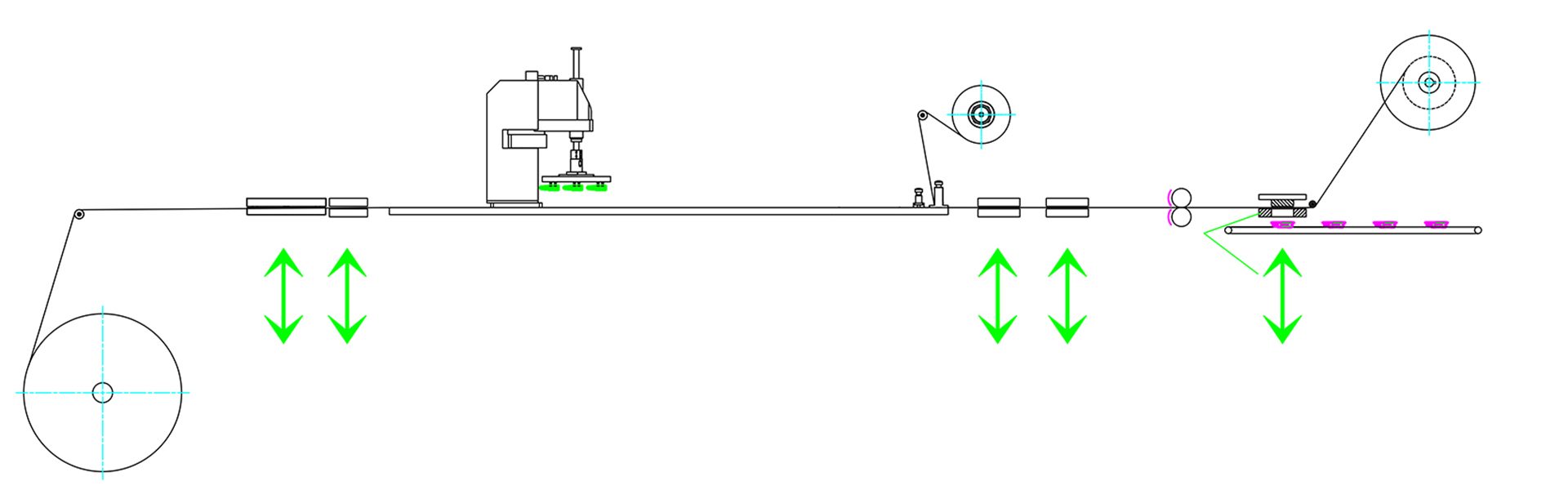
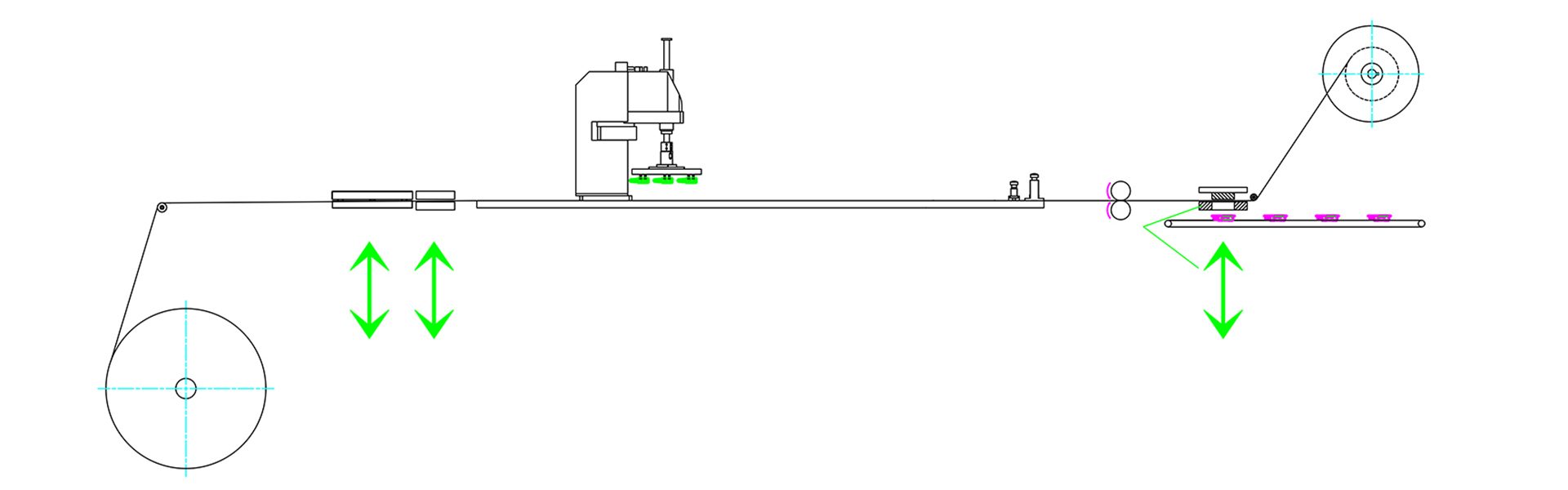
Horizontal Packaging Workflow
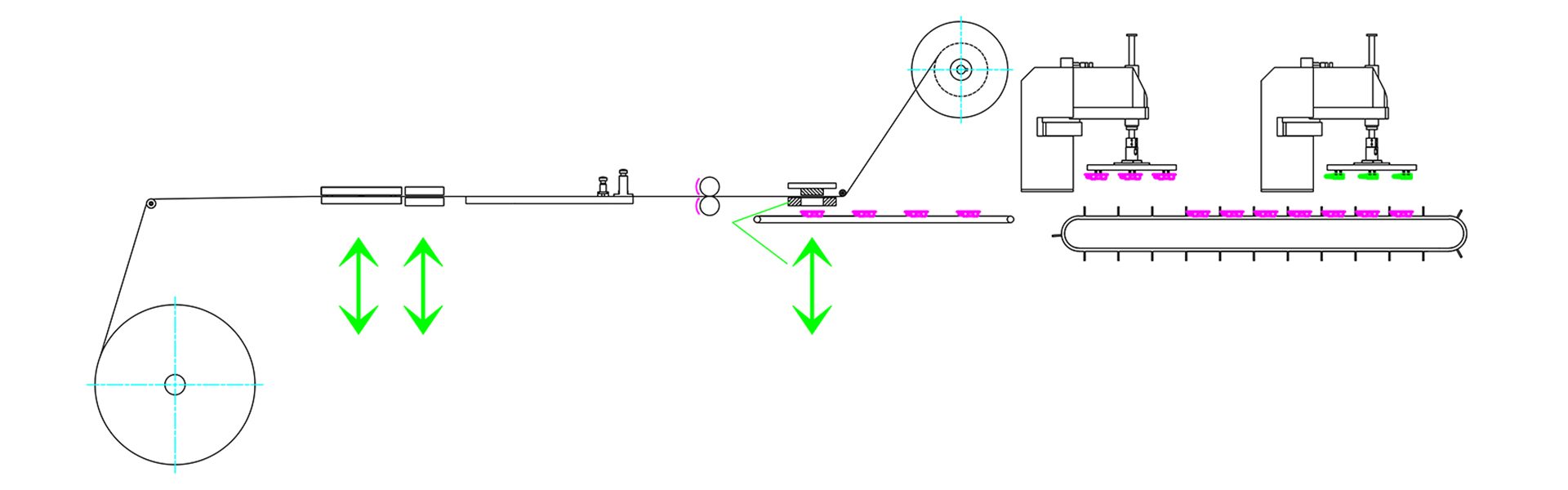
Upright Packaging Workflow
Core System Capabilities
Advanced robotic arms driven by servo and pneumatic systems, featuring vacuum suction (for horizontal) or mechanical gripping (for vertical) tools.
Intuitive, straightforward format changeovers for rapid production shifts.
Delicate handling mechanisms designed to ensure absolute protection from glass damage.
State-of-the-art servo-regulation for flawless mechanical synchronization.
Ergonomically optimized filling heights for user-friendly operation.
Smart Vision Inspection
Before blister sealing or entering the cartoning phase, an integrated high-resolution camera system verifies the exact vial count and confirms proper seating within the blister or tray, ensuring 100% packaging accuracy.
Flexible Operational Modes
To meet varied production strategies, our equipment offers distinct operational modes tailored to the packaging layout.
For Horizontal Blisters (3 Modes):
Sealed Blister (With Backing): A comprehensive process encompassing thermoforming, robotic loading, foil heat-sealing, punching, and final product discharge.
Unsealed Loaded Tray (Without Backing): For parenteral applications where a foil barrier is not mandatory, the machine thermoforms, loads, and punches. Our clamp-pack undercut design ensures vials remain securely locked in the unsealed tray.
Empty Tray Thermoforming: Dedicated solely to forming and punching empty trays, then discharging them for follow-up feeding processes.
For Vertical Trays:
Empty Tray Thermoforming & Downstream Loading: The machine operates solely to thermoform and punch deep-drawn trays. The empty trays are then conveyed downstream where a robotic station completes the upright feeding process before cartoning.
Sealed Blister (With Backing)
Unsealed Loaded Tray (Without Backing)
Empty Tray Thermoforming
Video Demonstrations: Horizontal vs. Vertical Vial Packaging
Horizontal Vial Packaging
Vertical Vial Packaging
Selecting the Right Equipment: Platen Sealing Technology
For vial blister packaging, utilizing a platen-type (intermittent) blister machine is technologically imperative. Rotary sealing systems are inherently unsuitable, as their cylindrical sealing rollers cannot accommodate the deep, rigid cavities needed to hold glass vials securely.
We provide two heavy-duty series of platen-style blister machines to match your production scale:
BMP Series (Balcony Layout): Engineered under strict cGMP guidelines, this series features a premium cantilever (balcony) structure, ensuring ultimate hygiene, easy cleaning, and line clearance. Models include the BMP180, BMP270, BMP400, and BMP700.
DPP Series (Traditional Layout): Built with a classic top-and-bottom enclosed frame for reliable, steady production. Models include the DPP150, DPP260/350/500.
(Note: The numeric value in the model name denotes the maximum web width in millimeters. A larger number indicates a wider forming area and higher output capacity.)
Seamless Cartoning Integration
Whether you choose horizontal blisters or vertical trays, our systems are engineered for seamless connectivity with downstream cartoners, delivering a fully automated, high-efficiency “Blister + Cartoning” packaging line.

The-Horizontal-Packaging.jpg)
The-Upright-Vertical-Packaging.jpg)